
Holiday decorations are easy to overlook once the season ends, but the way they are stored can affect roof drainage, attic ventilation, and the condition of shingles or flashing. In Kingston, NY, winter snow, freeze-thaw cycles, wind, and damp storage areas make careful organization especially useful.
Most decorations belong in a dry indoor storage area rather than on the roof, beneath roof edges, or inside an unconditioned attic. A few simple choices can prevent blocked gutters, moisture damage, pest problems, and accidental pressure on roofing materials.
Where should holiday decorations be stored?
The safest location is a dry, stable area inside the home, such as a finished storage room, closet, basement area, or climate-controlled section of an attic. Decorations should be kept away from areas where roof leaks, condensation, or temperature swings are likely.
A storage location should have:
- Protection from rain, snow, and melting ice
- Enough ventilation to limit condensation
- A level surface that will not shift or collapse
- Clearance from recessed lights, chimneys, flues, and electrical equipment
- Room to inspect the surrounding area for dampness or pests
Unfinished attics can be convenient, but they are not automatically safe storage spaces. Temperatures may change sharply, and roof sheathing can develop condensation when warm indoor air reaches cold surfaces. Cardboard, fabric, paper ornaments, and electrical cords can also absorb moisture in an attic that is not well sealed.
Do not store boxes directly against roof decking. Leave space around the stored items so air can move and so the underside of the roof can be checked for staining, frost, or damp insulation.
Why can roof-related storage cause problems?
Items placed near roof edges can interfere with drainage and ventilation. Boxes, wreaths, light strands, and artificial greenery may end up in gutters, on low-slope roof sections, or beneath overhangs. Even lightweight decorations can trap leaves and snow or redirect water toward vulnerable roof areas.
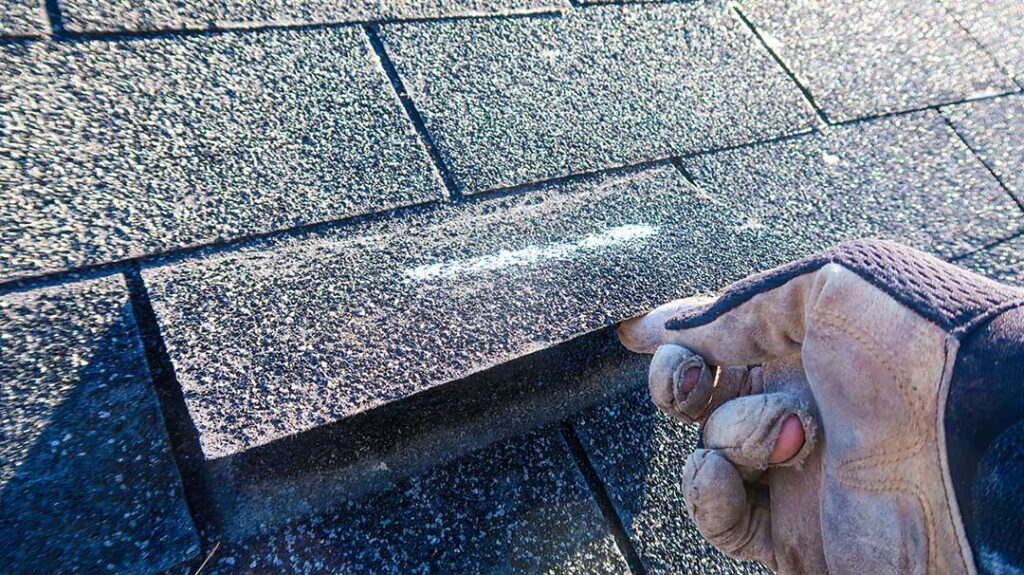
Storage can also cause damage through pressure. Walking on shingles, leaning ladders against gutters, or placing heavy containers on roof surfaces may loosen granules, crack brittle materials, bend flashing, or deform gutters.
A roof is not a general-purpose storage platform. Its components are designed to shed water, not to support repeated foot traffic or concentrated loads from household items.
Should decorations ever be stored on a roof, porch roof, or overhang?
No. Decorations should not be stored on any roof surface, porch roof, dormer roof, or narrow overhang. These areas may appear flat or sheltered, but they are exposed to moisture, wind, ice, and temperature changes.
Roof storage creates several risks:
- Snow and ice can add weight to boxes and containers.
- Wind can move lightweight items into gutters or against flashing.
- Meltwater can enter open containers and freeze again.
- Plastic bins can scrape shingles as they shift.
- Stored materials may obstruct roof vents or create nesting areas for animals.
- Retrieving items later may require unsafe movement across icy surfaces.
Even if decorations are covered with a tarp, the tarp can hold moisture against the roof and may rub against shingles during windy weather. A tarp also does not prevent snow accumulation or water from entering through seams.
How should lights and extension cords be stored?
Light strands should be cleaned, dried, and loosely wound before storage. Tight wrapping around a hand, hanger, or narrow object can create sharp bends that damage insulation or strain connections.
A practical method is to:
1. Inspect cords for cuts, exposed wiring, melted sections, or loose sockets.
2. Allow any damp strands to dry completely indoors.
3. Coil them in broad loops without kinking.
4. Secure each coil with a reusable tie rather than tape pulled tightly around the cord.
5. Place strands in a labeled container away from moisture and sharp tools.
Avoid leaving cords draped over gutters or roof edges during the off-season. Repeated movement from wind can wear through insulation, while trapped moisture can corrode connections. Before reuse, check for brittle insulation, cracked bulbs, damaged plugs, and signs of chewing by rodents.
Extension cords should be stored separately from lights when possible. This reduces tangling and makes it easier to identify damaged equipment before it is used outdoors.
What is the safest way to store wreaths, garlands, and artificial greenery?
Wreaths and garlands should be stored in rigid containers or breathable bags that protect their shape without trapping moisture. Artificial greenery should be free of water, mud, salt, and outdoor debris before it is packed away.
Do not place wet greenery directly into plastic tubs. Moisture trapped in a sealed container can encourage mildew and leave an odor that is difficult to remove. Let items dry fully, then use tissue paper or clean packing material to prevent crushing.
Wreaths should not be stacked beneath heavy boxes. Flattened branches can become difficult to restore, and decorative frames may bend. Hanging storage can work indoors if the supporting hook is attached to a secure wall or shelving system rather than to roof framing that was not designed for added household loads.
Natural wreaths, branches, or dried plant materials should be checked for insects before storage. They should never be stored against insulation, near heat-producing equipment, or beside electrical components.
How can storage prevent gutter and roof drainage problems?
Keep all decorations, containers, and packing materials away from gutters and downspouts. A blocked gutter can overflow onto fascia boards, siding, walkways, or foundation areas during rain and snowmelt.

After decorations are removed, inspect the roofline from the ground for:
- Light strands caught beneath shingles
- Clips left attached to gutters or drip edges
- Ties wrapped around downspouts
- Garland blocking drainage paths
- Decorations resting against flashing
- Loose fragments or fallen fasteners
Do not pull hard on an item that appears wedged beneath a shingle or flashing edge. Sudden force can lift roofing materials or damage a seal. If an item cannot be removed safely from the ground or from a stable ladder position, the risk may justify qualified assistance, particularly during icy conditions or on steep roofs.
Can attic storage affect roof ventilation?
Yes. Storage that blocks soffit vents, ridge vents, gable vents, or air channels along the eaves can reduce ventilation. Poor airflow may contribute to condensation, uneven roof temperatures, ice buildup, and premature deterioration of roofing materials.
Keep boxes and containers several inches away from vent openings and avoid compressing insulation near the eaves. Never cover a vent with plastic, blankets, wrapping paper, or storage bins. Ventilation openings need to remain clear throughout the year, not only during winter.
If frost, water stains, peeling paint, musty odors, or damp insulation appear in the attic, move stored items away from the affected area and investigate the source. The problem may involve air leakage, inadequate ventilation, flashing, or another roof-related condition.
What should be done before putting decorations away?
A short inspection before storage can prevent small problems from becoming harder to find later.
Check that:
- Decorations are dry and free of leaves or mud.
- Light strands and plugs show no damage.
- Hooks, clips, and fasteners are removed from roof edges.
- Boxes are labeled by room or holiday use.
- Heavy containers are placed on sturdy shelving.
- Nothing blocks attic vents or access panels.
- Items are not stored beneath known leaks or condensation spots.
Use plastic containers for items that may be exposed to basement humidity, but avoid sealing anything that is still damp. Cardboard can work in dry indoor spaces, although it should not be placed directly on concrete floors or in areas with a history of water intrusion.
Organized storage reduces the temptation to place items wherever space is available, including gutters, roof edges, or poorly ventilated attic corners. For homes exposed to heavy winter weather, keeping decorations off the roof and clear of drainage and ventilation paths is the simplest way to protect both the stored items and the roofing system.
